
Physical packaging mockups or CGI?
Physical packaging mockups let you handle a sample and examine its materials and finish. CGI creates digital views of a pack for review, presentation or imagery. The right choice depends on the decision you need to make; a project may use both.
Discuss your project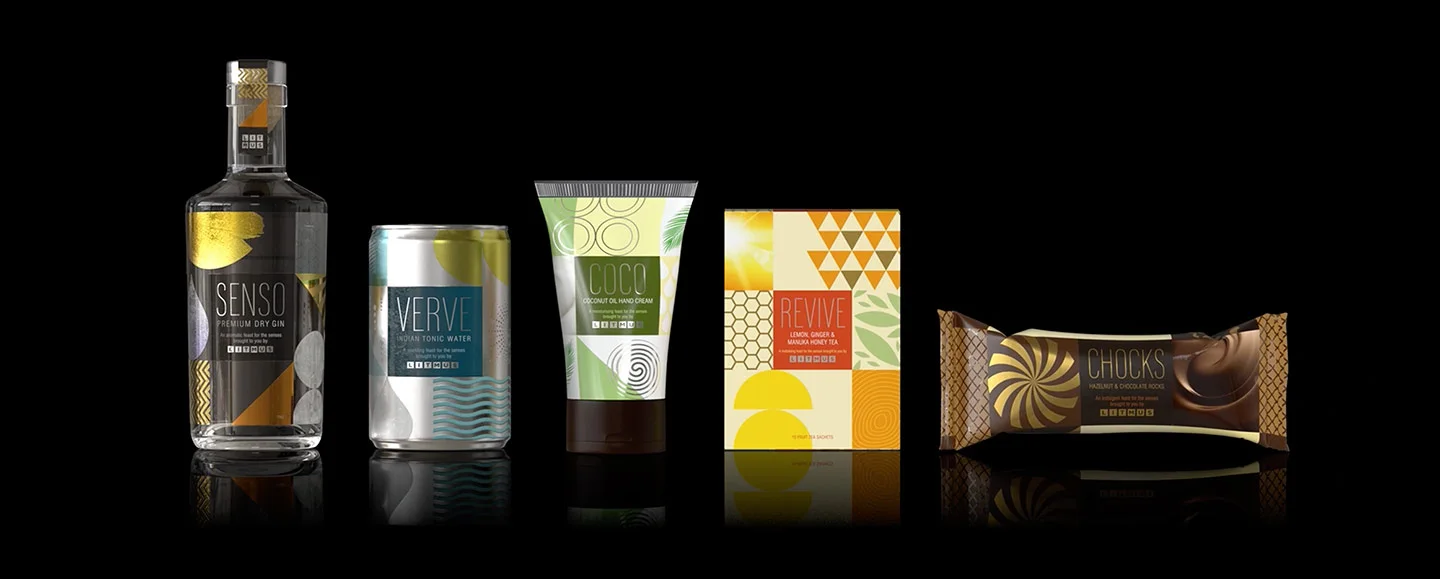
When a physical mockup helps
Choose physical making when the team needs to hold the object, review scale or compare a printed finish under actual lighting. It can reveal how artwork travels around a pack and how several samples look together.
Agree how closely the mockup must represent production materials and methods. A sample made for appearance is not automatically a functional prototype or a certified production proof. Tell the studio what needs to be tested, demonstrated or approved.
When CGI helps
Digital visuals are useful when you need several viewpoints, a presentation of a range or imagery of a proposed pack. Litmus offers product renders, CGI environments and animation, alongside interactive product visualisation examples.
A render depends on the model, artwork, material settings and lighting used to make it. It cannot tell you how a substrate feels in a hand. If a finish or structure is central to the decision, discuss whether a physical sample is also needed.
Combining both in one brief
Share the same artwork version, pack dimensions and design references for both approaches. Specify the physical samples and digital deliverables separately: quantity, image views, intended usage and any motion required.
Plan which stage each output supports. A digital view may help compare early options; a physical sample may support a later review. Ask the team to recommend an approach after reviewing your brief. Neither method has a universal price or turnaround advantage for every project.
Explore the detail.
Start with your next pack.
Tell us the format, what you need to show and when you need it. The page you enquire from is included with your brief.